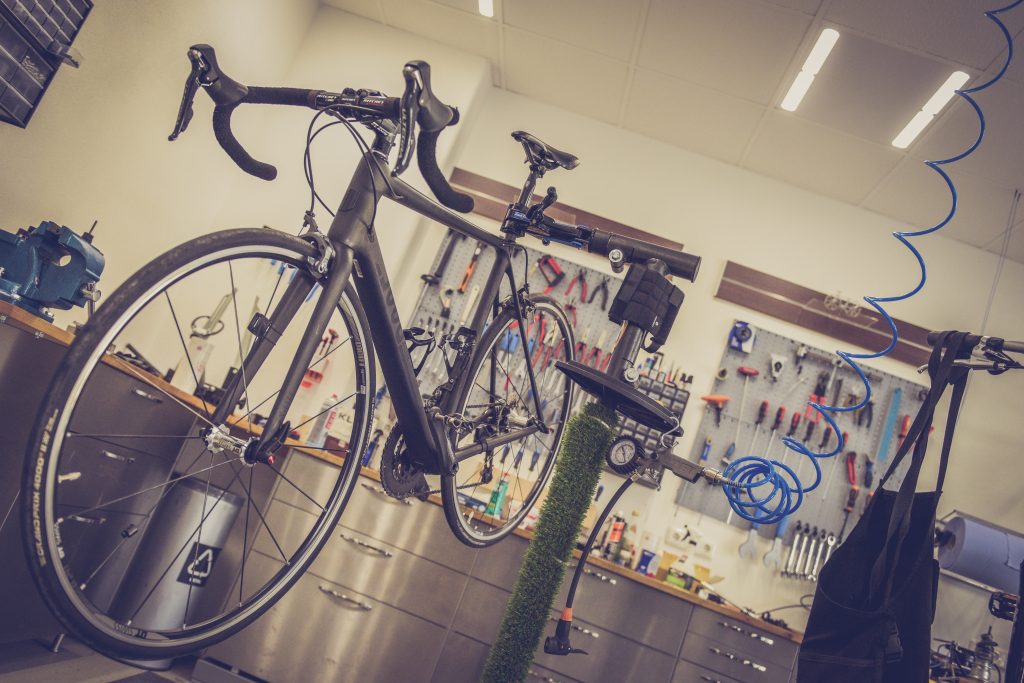
Why you need a bike tune-up
If you haven’t shown your bike much love recently, you need to make sure it’s fit for the road before getting out there. Regularly maintaining your beloved bike will save you money in the long run. It promotes both longevity and performance, which both reduce the need for costly upgrades or repairs later down the road.
How often you need to give your bike a tune-up varies on your use. Regardless of whether you use your bike for commuting every day, weekend cycling or just to pop to the shops, here are some bike tune-up tips to keep your bike ticking over.
Do I always need to visit the local bike shop?
At a very basic starting point, it’s best to put your bike in for a good old fashioned service at a bike shop to get your bike in top condition. After that, it’s about maintaining your bike which you can totally do yourself, for which you’ll need some basic tools. Check out our beginner’s guide to bike maintenance to get started.
A multitool with various sized allen keys [paid link] is a good place to start, along with a pump and pressure gauge to keep your tyres pumped up properly. Bike lube for your chain is also a good investment, as well as a bike cleaner to remove dirt and grease.
Regardless, getting your bike in for a regular tune-up at a bike shop is a valuable choice to make.
The cost of a tune-up
Most bike shops offer a few different packages depending on how much work your bike needs. This can cost anywhere between 50 to 150 for the full service. The basic tune-up at the lower end of the scale normally includes the adjustment and tightening of all key components, such as brakes, gears, tyres, cables and your chain.
Premium services are more for a bike that needs a full strip-down, lubrication and reassembly. Some parts may need removing to be cleaned. So, as well as the above, you would normally also get adjustments, cleaning and tightening of the crankset, bottom bracket, wheel bearings, and headset. You’d usually get a bike wash as well to get your bike sparkling clean.
So, what’s actually done during a basic bike tune-up, and why?
Cleaning your hubs, spokes and frame
Washing your bike is vital for good performance and reliability. All the dirt, grit and grease that makes their way onto your bike add friction to your components, so it’s important to keep your bike clean to avoid degradation. Your hubs, spokes and frame are the areas to start with, ensuring your bike looks good and performs better.
Chain lubrication
Keeping your bikes key mechanisms well-lubed makes sure your bike continues to run smoothly. You also want to make sure the chain doesn’t break, so using proper chain lube is the best option – no other alternatives are quite the same. If in doubt, let a proper bike mechanic do this to make sure your chain is working as good as new, and if your chain is rusty, they’ll likely recommend replacing it immediately.
Checking your tyres
Taking care of your tyres is one of the most underlooked parts of bike maintenance, but also one of the most important. Keeping your tyres in good shape is vital for good performance and safety. Both tyres should be inflated to the correct pressure level [paid link] to improve cycling efficiency and reduce the risk of punctures. Tyres also need to be checked for cracking and slow punctures. If you don’t know what pressure you should pump your tyres up to, ask at a bike shop. If you don’t use your bike regularly, you need to check the tyres haven’t deteriorated before riding the bike – is there plenty of tread left, are they still pumped up fully, are there any bumps or cuts, and so on. A bike shop can also fit new tyres if needed for better rolling speed, cornering and puncture resistance.
Getting your wheels aligned
Your bike wheels are obviously a key thing to look after. You need to trust that they are safe to cycle on, spinning both freely and straight. Any wobbling or friction can be sorted out with a bike tune-up, as well as making sure the spokes are tightened and brake pads are working properly. It’s all about ensuring your wheels are aligned, rolling true, and without friction.
Brakes working safely
As mentioned above, brake pads need to be working properly to make sure you’ve got proper braking power. Ineffective brakes are dangerous on the roads, especially in wet conditions or when going downhill. Fixing brakes is an easy and cheap fix. During a tune-up, the mechanic will make sure your brakes are tight enough and the brake pads have enough life in them to ride safely.
Gears and cables in optimal condition
Finally, you need to ensure your headset, crank, cables and gears are in optimal condition. If your gears aren’t changing smoothly, or something is rattling, you’ll need a re-alignment and some tightening of the bolts to sort them out. A tune-up will cover this, You don’t want to be trying to tackle a hill only for your gears to let you down!
Keeping your bike well-serviced will protect it against mechanical issues and help it perform better. You’ll want to make bike maintenance a regular occurrence to avoid any long-term damage and costly repairs – this can be a mix of a tune-up and generally looking after your bike better. Simply put, the more you look after your bike, the better it will ride.
A full, professional tune-up should be at least yearly, preferably a lot more regularly, to ensure your bike runs smoothly all year round. Too many cyclists never get a tune-up and then wonder why their bike has broken down. A basic service is pretty cost-effective and will save you money in the long run.